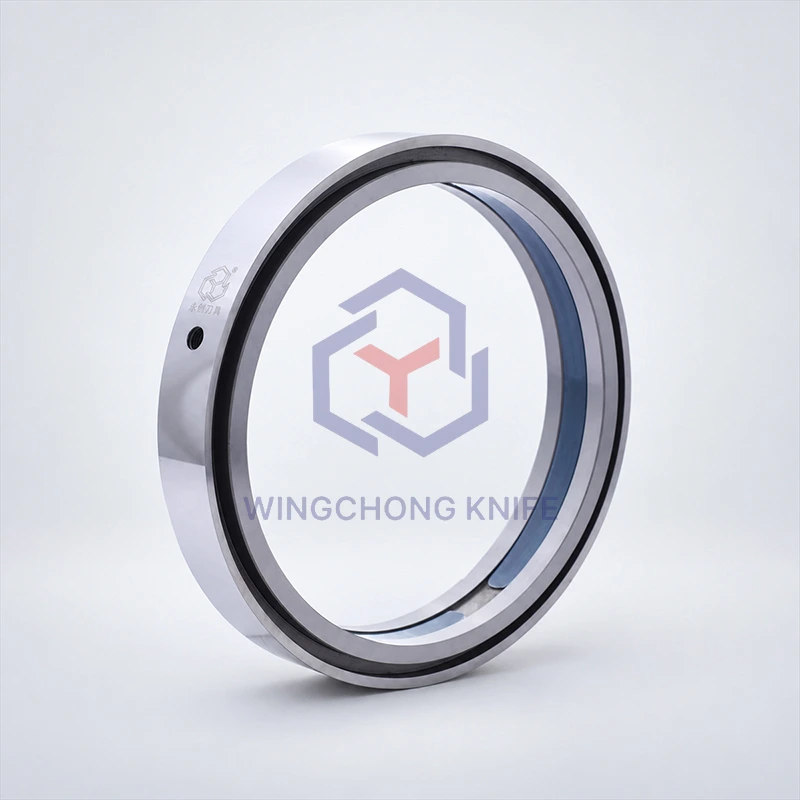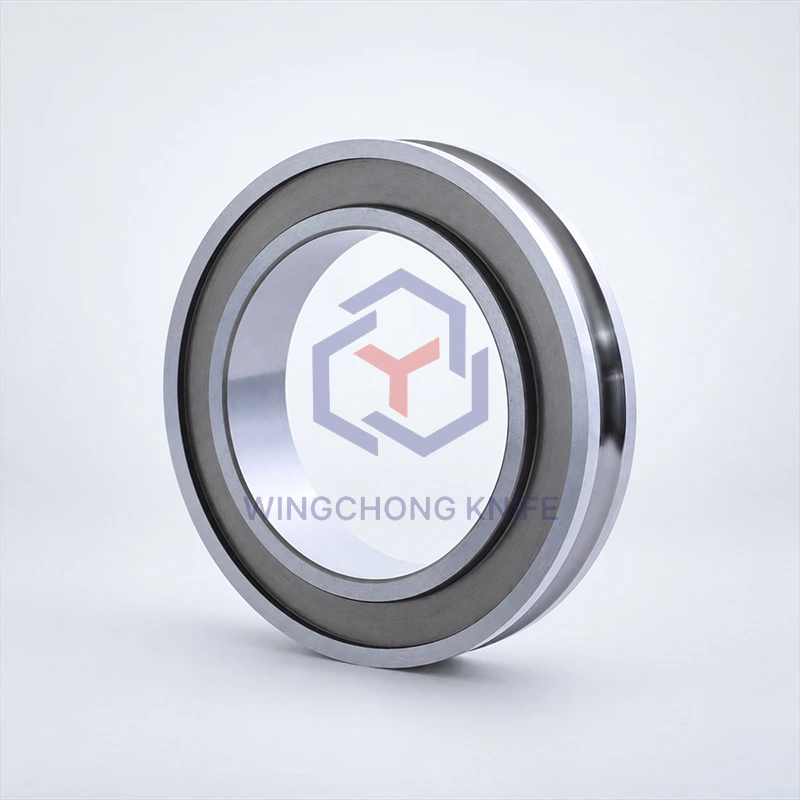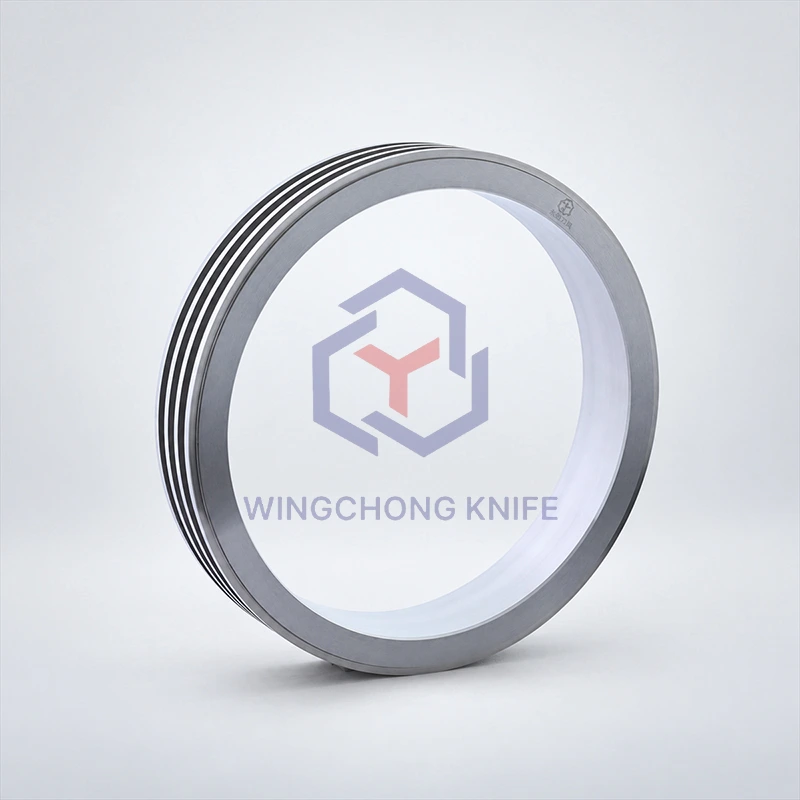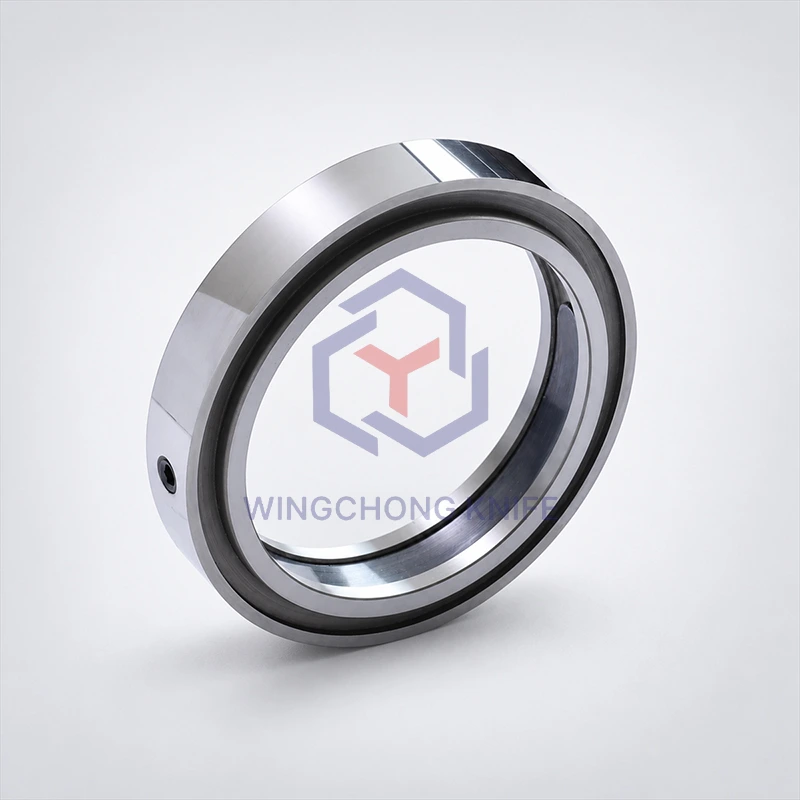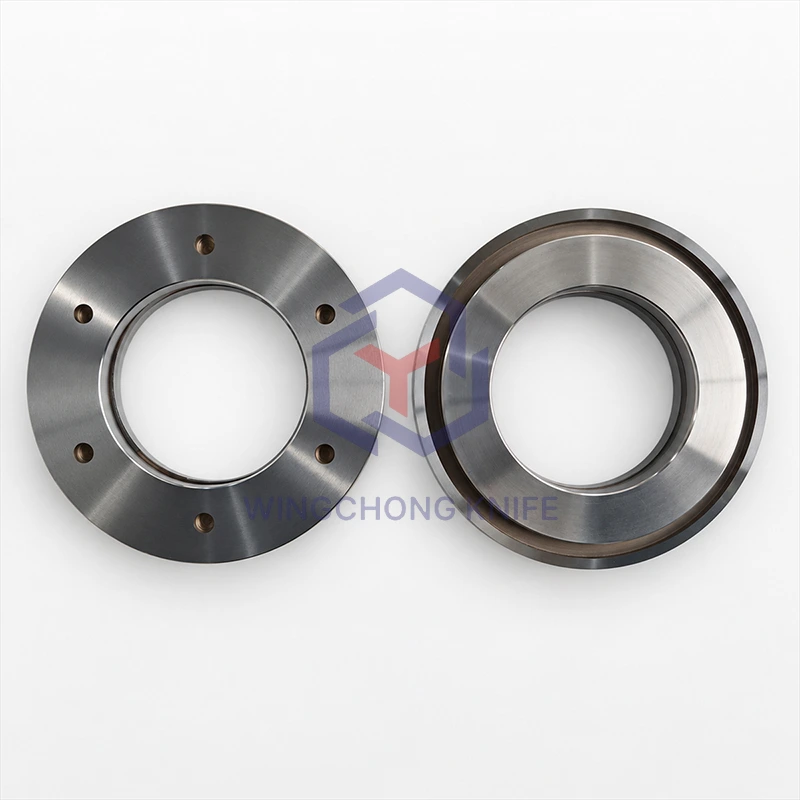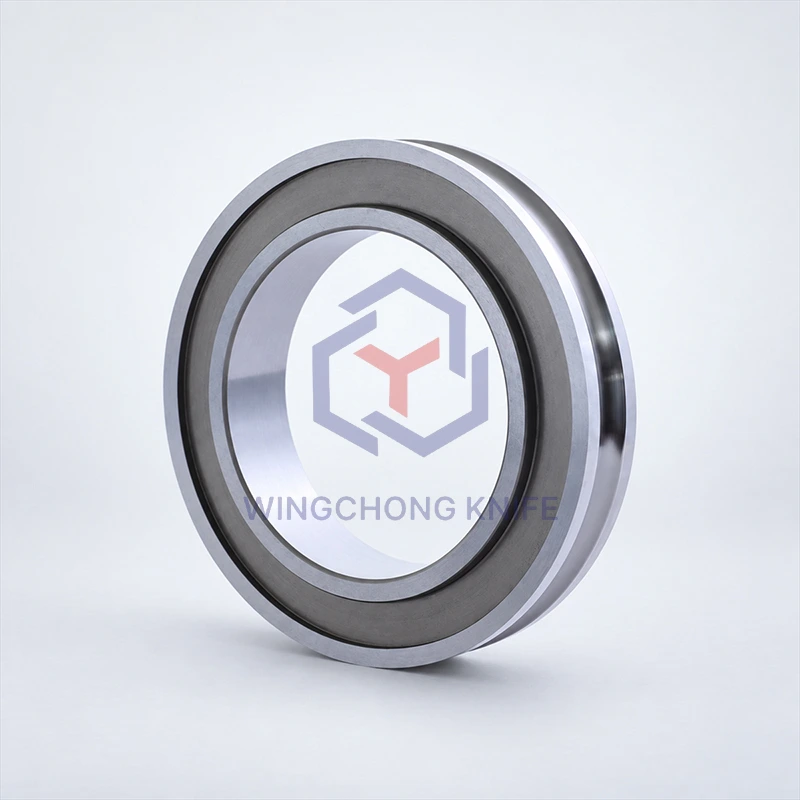

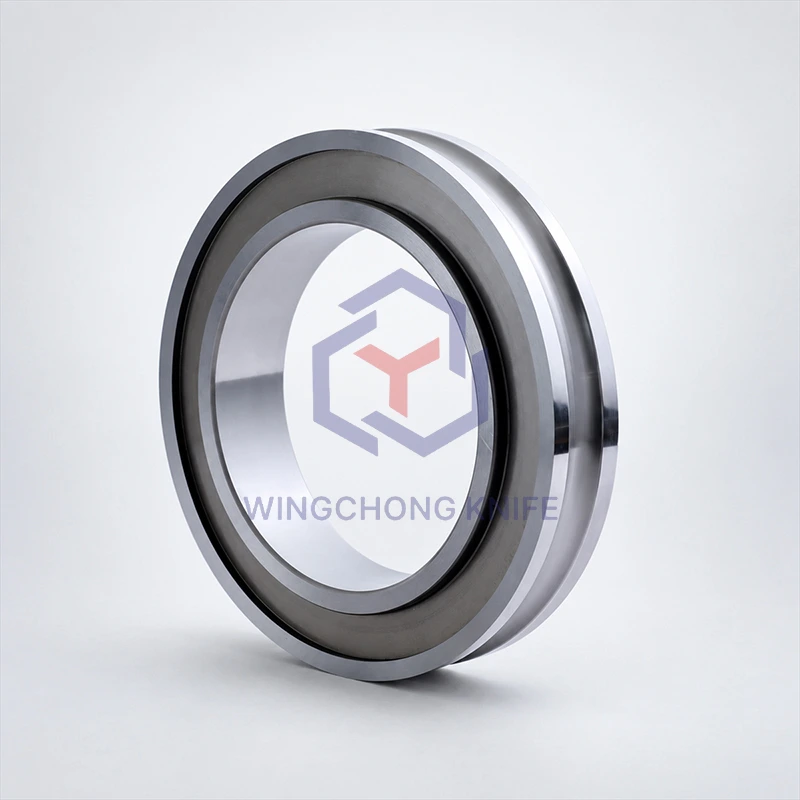

Free Locking Bottom Knives feature a plain bore design without an internal locking mechanism, allowing them to be mounted directly on filled shafts or expanding shafts. With an expanding shaft, the knife is securely positioned by the shaft's expansion mechanism without additional locking components.
These bottom knives are designed for slitting machines, label inspection systems, and rewinders and are suitable for precision slitting of plastic films, metal foils, adhesive tapes, labels, paper, paperboard, textiles, rubber, laminates, and nonwoven materials.
Installed on the bottom knife shaft, Free Locking Bottom Knives work with upper dished knives, knife holders, and pneumatic knife holders to form a complete shear slitting system. WINGCHONG KNIFE can also manufacture matching knife components for accurate system compatibility.
The knives undergo through-hardening heat treatment to provide uniform hardness, improving wear resistance, dimensional stability, and service life for continuous slitting applications.
Plain bore design without an internal locking mechanism
Suitable for filled and expanding shafts
Secure positioning through expanding shaft mechanisms
Designed for shear slitting systems
Through-hardened for improved wear resistance
Stable dimensions for continuous operation
Custom dimensions and specifications available
Free Locking Bottom Knives are suitable for:
Plastic films
Metal foils
Adhesive tapes and labels
Paper and paperboard
Thin paper
Textiles
Rubber
Flexible laminates
Adhesive laminates
Nonwoven materials
Other specialty web materials
As a custom slitter knife manufacturer, WINGCHONG KNIFE can manufacture Free Locking Bottom Knives according to your technical drawings, existing samples, shaft dimensions, and machine specifications.
Customization options include:
| Outer Diameter | Inner Diameter | Thickness |
| 60 / 80 / 90 | 105 | 10 |
| 130 | 90/100 | 10 |
| 150 | 120 | 10/15/20 |
| 180 | 150 | 10/15/20 |
| 200 | 138 / 144 / 150 | 20/30 |
| 240 | 140 / 188 | 20/30 |
| 250 | 140 / 188 | 20/30 |
| 300 | 250 | 20/30 |
| Material: 1.2379、chrome-alloyed (1.5 % Cr), high-chrome-alloyed tool steels (12 % Cr) | ||
● Knife diameter and thickness
● Bore diameter and mounting dimensions
● Cutting edge geometry
● Edge angle and profile
● Knife material and hardness
● Heat treatment
● Surface finish
● Dimensional and geometric tolerances
Matching dished knives, knife holders, and pneumatic knife holders can also be supplied for complete shear slitting systems.

Free Locking Bottom Knives are commonly used with:
● Filled knife shafts
● Expanding knife shafts
● Shear slitting systems
● Pneumatic knife holders
● Dished knife assemblies
● Slitting machines
● Slitter rewinders
● Label inspection equipment
The bore dimensions and knife specifications can be customized to match your existing shaft and upper knife assembly.

Free Locking Bottom Knives are widely used in:
● Flexible packaging converting
● Film and foil slitting
● Label converting and inspection
● Paper and paperboard converting
● Textile processing
● Nonwoven converting
● Adhesive tape processing
● Rubber slitting
● High-speed web processing
Custom Manufacturer — Manufactured according to your drawings, samples, and machine requirements.
Plain Bore Design — Suitable for filled and expanding shaft configurations.
Through Hardening — Provides uniform hardness and improved wear resistance.
Precision Manufacturing — Controlled bore, dimensions, and cutting geometry.
Complete Knife Matching — Matching upper knives and holders can be manufactured in-house.
B2B Custom Production — Suitable for OEM, replacement, and customized slitting applications.
Abrasive Cutting Knives are industrial cutting tools specifically designed for cutting abrasive rolls such as sandpaper and abrasive cloth.
Dished knives are circular cutting tools used for shear-type slitting. Unlike completely flat “flat knives,” their blades feature a concave geometric shape (resembling a plate or dish), a design that enables them to generate specific lateral cutting forces during rotational shearing.
Adhesive materials: Self-adhesive labels, adhesive tape, various composite films (die-cutting can create a temporary seal along the cut edges).
Elastic/soft materials: Rubber, non-woven fabric (NWF), textiles, tissue paper.
Abrasive/hard materials: Materials such as sandpaper that can quickly wear down standard sharp blades.
Copyright © 2026 by QINGDAO WINGCHONG PRECISION MACHINERY CO.,LTD All Rights Reserved