
Choosing the right slitter knives is important for achieving clean cuts, stable production, and longer knife life. The best choice depends on your material, cutting method, machine speed, and required cutting quality.
1. Choose the Knife Based on Your Material
Different materials require different slitting solutions:
* Slitter knives for paper: Sharp, stable edges help reduce dust, lint, and edge tearing.
* Slitter knives for plastic film: Precision grinding and suitable edge geometry help prevent film deformation and tearing.
* Slitter knives for aluminum foil: High edge stability and proper knife clearance are important for clean, burr-free cutting.
* Slitter knives for labels: Mirror polishing or anti-stick treatment can help reduce adhesive buildup.
* Slitter knives for laminates: A smooth surface and optimized edge geometry can improve cutting consistency and reduce material buildup.
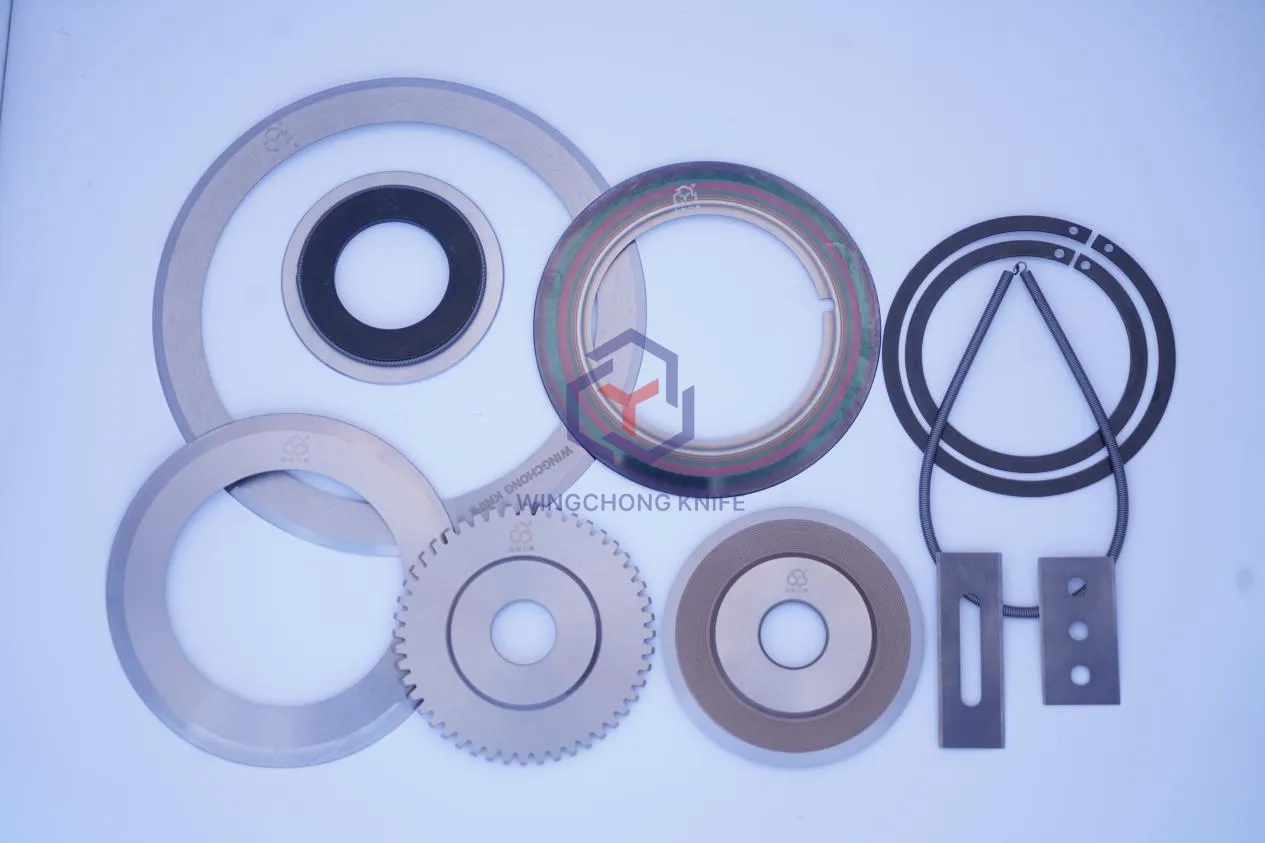
WINGCHONG provides dished knives, flat knives, and bottom knives for different web materials and slitting applications. (WINGCHONG)
2. Slitter Knife Selection: Material and Bevel Angle
Knife material selection should be based on material hardness, abrasiveness, machine speed, and required service life. Different tool steels can be selected for different cutting conditions.
Bevel angle selection is also important. The correct angle should match the material and cutting method to achieve a stable cutting edge and clean slit.
For crush cutting applications, WINGCHONG offers 30°, 45°, and 60° cutting angles for different materials and machine requirements. (WINGCHONG)
3. Match the Knife to Your Slitting System
A slitter knife must also match the machine configuration, including:
* Knife diameter and thickness
* Bore and mounting dimensions
* Bevel angle
* Upper and bottom knife configuration
* Knife holder type
* Machine speed and cutting method
For shear slitting, upper dished or flat knives work together with bottom knives to form a complete cutting system. (WINGCHONG)
4. A Simple Slitting Application Guide
Before selecting a knife, identify these four points:
Material → Cutting Method → Machine → Cutting Problem
For example, adhesive labels may require mirror-polished or anti-stick knives to reduce adhesive buildup, while high-speed film slitting may require precise edge geometry and stable knife material. (WINGCHONG)
The right slitter knife selection can improve cutting quality, reduce downtime, and extend knife service life.
If you are unsure how to choose slitter knives, provide your material, thickness, machine model, knife dimensions, and cutting method. WINGCHONG can recommend a suitable slitting knife solution based on your application.
Copyright © 2026 by QINGDAO WINGCHONG PRECISION MACHINERY CO.,LTD All Rights Reserved


