
一、Core Structural & Functional Differences Between Dished and Flat Slitting Knives
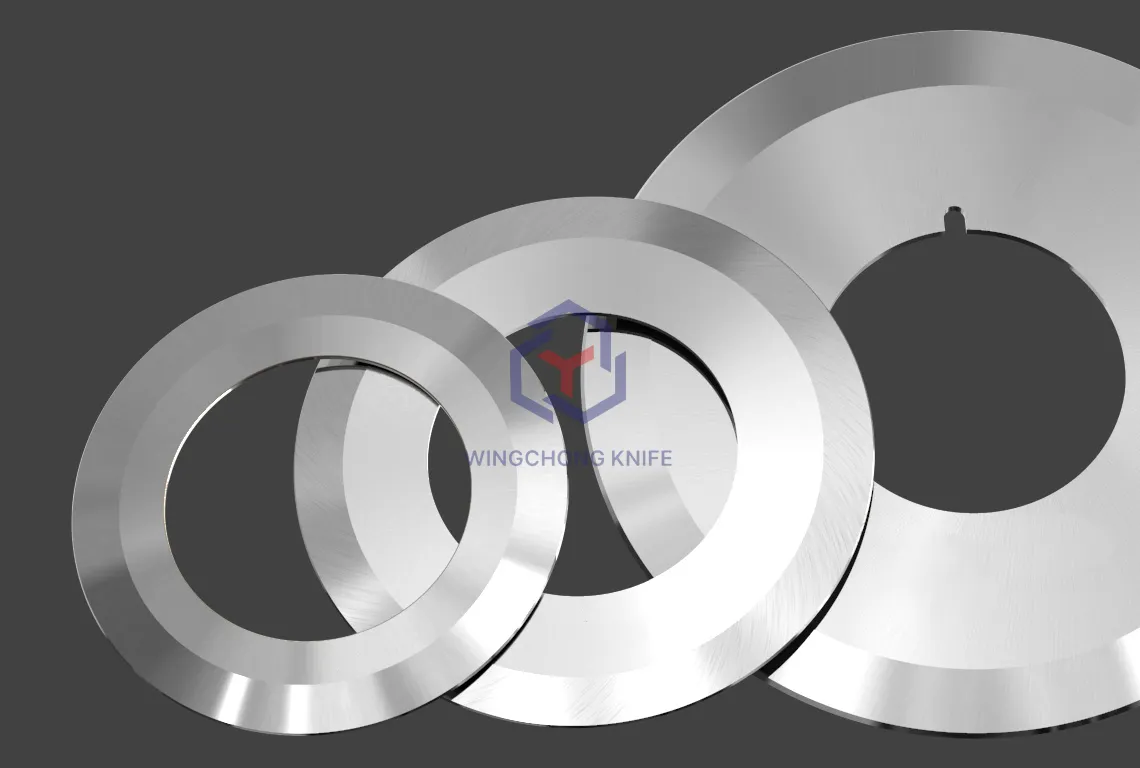
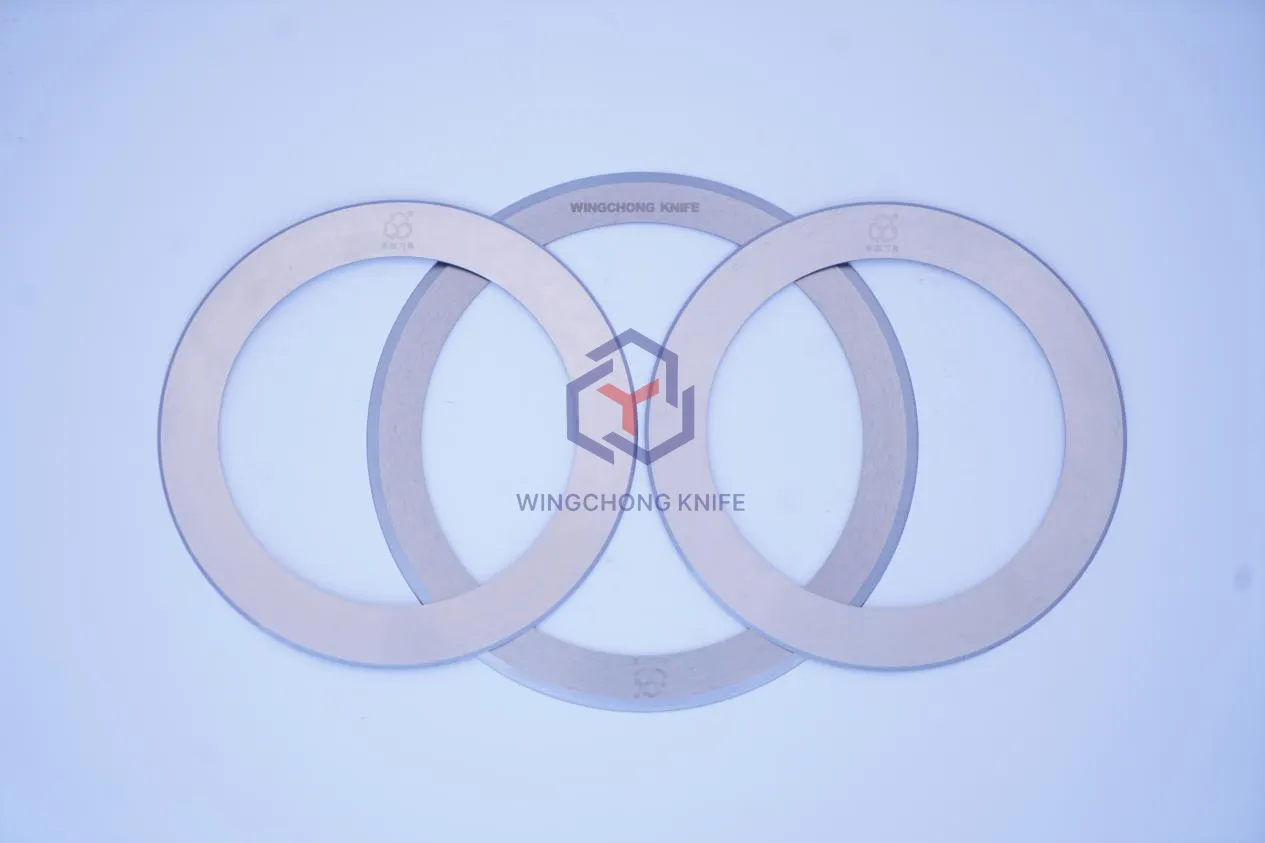
As two mainstream types of upper slitting knives for industrial shear slitting systems, dished knives and flat knives serve as core consumables for web slitting applications, yet they feature distinct geometric designs and mechanical properties that determine their applicable processing scenarios. Flat slitter knives adopt a fully flat, uniform thickness structure with a straight cutting edge, delivering outstanding structural rigidity, stable pressure bearing capacity, and excellent concentricity during high-speed rotation. Their simple and durable design minimizes vibration and runout in continuous industrial operation, making them classic industrial slitting knives for heavy-duty and high-precision slitting production.
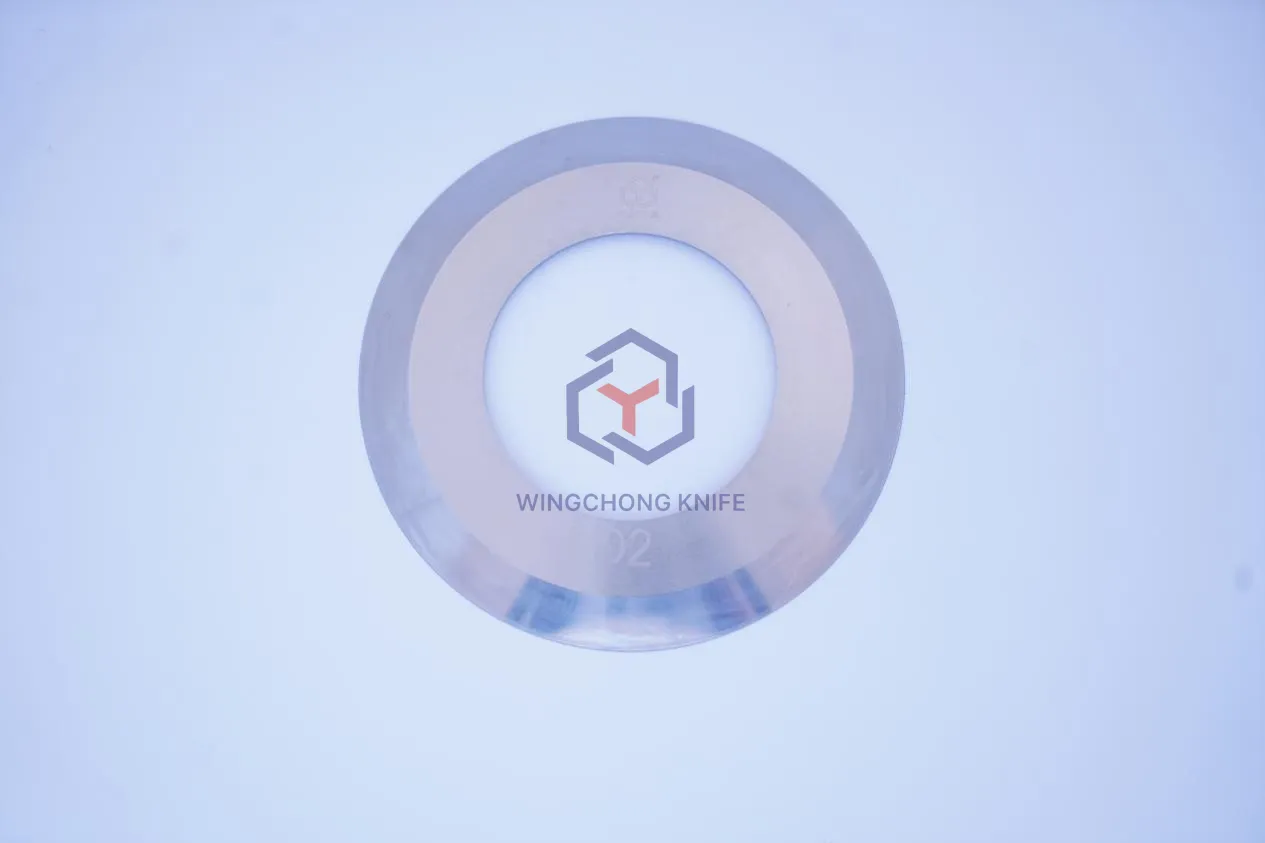
In contrast, dished slitter knives are engineered with a unique concave dished profile, forming an optimized curved contact surface when paired with bottom shear slitting knives. This specialized geometric structure effectively adjusts the material wrap angle and cutting overlap during slitting, buffers instantaneous cutting pressure, and avoids edge crushing or tensile damage to flexible materials. Unlike flat knives with rigid vertical cutting force, dished knives achieve gradual shear cutting, which greatly enhances the surface finish of slit materials and solves the common edge burr and cracking problems in flexible web processing.
二、Applicable Scenarios & Performance Advantages of Two Slitting Knife Types
A scientific slitting knife selection must match material characteristics, production speed, and precision requirements, where the performance gaps between dished knives vs flat knives become prominent. Flat slitter knives excel in processing thick, rigid, and high-density materials, including thick paper boards, composite sheets, rigid plastic films, and medium-thick metal foils. Relying on their high rigidity and impact resistance, flat knives maintain stable cutting accuracy under high-load and high-speed working conditions, with strong wear resistance and long service life, ideal for large-batch, standardized industrial slitting production.
Dished slitter knives are the preferred choice for ultra-thin, soft, and easily deformable web materials, widely applied in slitting thin films, packaging foils, non-woven fabrics, adhesive tapes, and lightweight paper rolls. The concave design of dished knives optimizes the shear clearance between upper and lower knives, realizes uniform stress distribution on the material cutting section, and effectively eliminates stretching, wrinkling, and edge damage of fragile flexible materials. For precision processing scenarios requiring ultra-smooth cutting edges and zero tensile deformation, dished knives show irreplaceable advantages over flat knives in shear slitting operations.
三、How to Choose the Optimal Slitting Knife for Your Production Line
The key to distinguishing and selecting industrial slitting knives lies in balancing material adaptability, production efficiency, and finished product quality. For manufacturers focused on heavy-duty cutting, high-speed continuous production, and processing rigid thick materials, flat knives are the cost-effective and stable solution. Their robust structure reduces replacement frequency and equipment maintenance costs, ensuring consistent dimensional accuracy of slit products in long-term industrial operation.
For enterprises engaged in flexible packaging, film processing, and precision web slitting that pursue flawless edge quality, dished slitter knives are the ideal option. By stabilizing cutting tension and optimizing shear contact state, dished knives significantly improve the yield rate of high-precision products. In actual production, many multi-functional slitting lines adopt a collocation strategy of dished knives and flat knives according to different processing materials, maximizing production flexibility and product qualification rate. Rational selection based on processing demands is the core principle of professional slitter knife configuration.
Copyright © 2026 by QINGDAO WINGCHONG PRECISION MACHINERY CO.,LTD All Rights Reserved


